




Syngenta introduces Atexzo insecticide/miticide
SPONSORED CONTENT
Prior to the kickoff of the 2026 GCSAA Conference and Trade Show, the team at Syngenta assembled at Orange Tree Golf Club in Orlando, excited to unveil what one of their researchers called a “once-in-a-lifetime” new mode of action for the turfgrass industry.
Enter: Atexzo® insecticide/miticide, a preventive and curative new tool for superintendents to control a range of turf pests, including annual bluegrass weevil (ABW), mole crickets, bermudagrass mites, European crane fly, billbugs, caterpillars and flea beetles. The product’s active ingredient is Plinazolin and is in the chemical class Isoxazoline and has no signal word. Because it can enter the insect by both ingestion and contact, it offers superintendents flexibility in when they apply it, and in some cases offers season-long control.
“It’s real exciting to be working for Syngenta right now. There are fewer manufacturers because of all the consolidation, and that means fewer innovations for this industry,” said Mark LaFleur, Syngenta communications lead for turf and landscapes. “Syngenta is innovating across all different platforms — turf, ornamental and pest management.”
While Syngenta had multiple product launches to talk about — including Trefinti™ nematicide/fungicide, the Aero™ GCX microclimate sensor and significant updates to WeevilTrakSM — Atexzo was what had researchers talking.

“It’s good to have another tool in the toolbox that is an annual bluegrass weevil insecticide,” said Ben McGraw, Ph.D., Penn State. “Backing up from that, there just aren’t many new classes of insecticides. There’s maybe one a decade. Not many products work well against ABW. It’s important that the industry is still investing in new solutions.”
McGraw has been working with Atexzo since 2017. The unique mode of action will delay resistance for ABW, an insect McGraw focuses on. The flexibility of application timing also makes the product unique, he adds.
“We’ve tested it on other pests, but for ABW specifically, it can be used as an adulticide or a larvicide — it’s unique in that it can do both,” he says. “That gives the superintendent a lot of flexibility.”
Season-long mole cricket control

A.D. Ali, Ph.D., has more than 30 years of experience in the green industry. He supervises all training and technical support programs for The Davey Tree Expert Company, with offices throughout the U.S. and Canada.
“It’s interesting; people hear Davey Tree, and they think of us as a tree care company, but we have a vast array of services we offer, including a golf division,” Ali says. Ali is particularly excited about what Atexzo can do for golf and sports turf, especially for controlling mole crickets in the South.
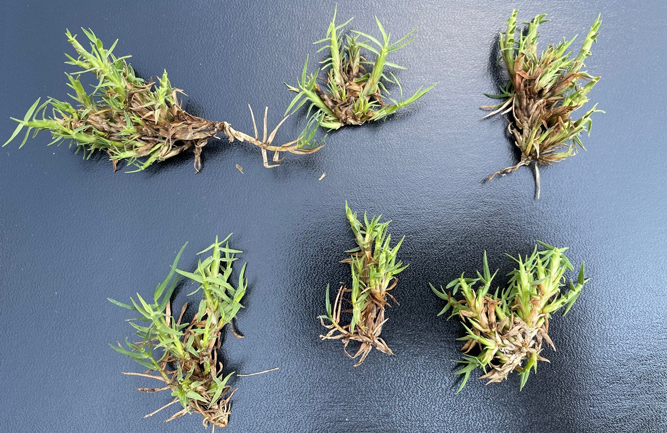
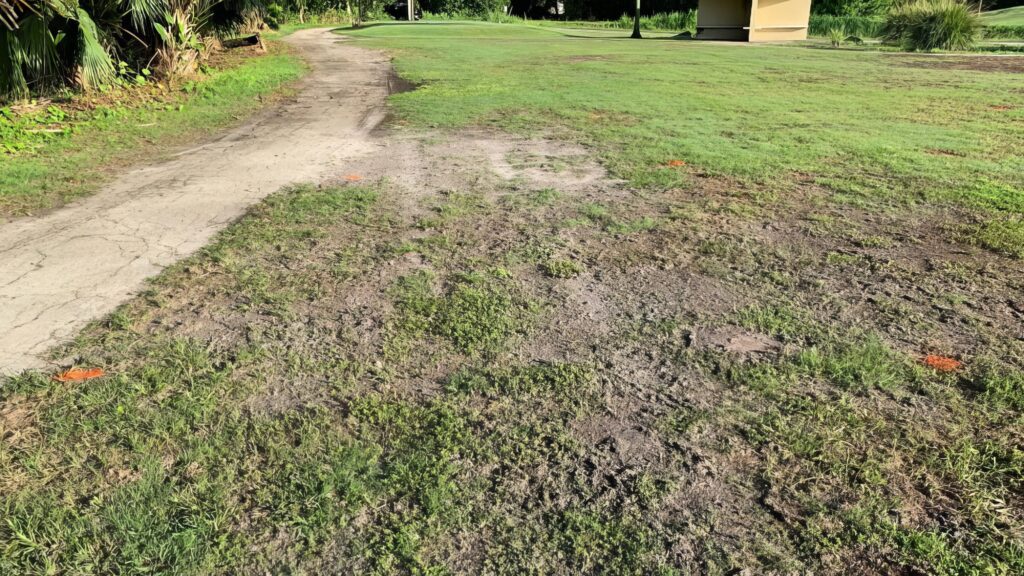
“Mole crickets are a key pest for both golf and sports turf, and they seem to come back every year,” Ali says. “They can fly up to 50 miles in one night, and they lay quite a few eggs.”
Ali says the tawny mole cricket is the most destructive mole cricket because it not only feeds on turf roots, but it also creates tunnels that loosen the contact between roots and soil. He has been working with Atexzo for five years, studying its effectiveness with mole crickets.
“I think the main reason (Atexzo is an exciting new product) is it’s a new chemistry,” Ali says. “It’s very effective, especially on mole crickets. You get season-long control with one application.”
Ali says it’s difficult to create a novel chemistry, which makes Atexzo a premium tool for superintendents.
“Nowadays, it’s very difficult, especially when it comes to cost, to create a novel chemistry,” Ali says. “Because of the cost to the company, the price is going to be higher. But when you consider you get season-long control with one application as opposed to having to make multiple applications, it lowers the cost.”
Flexibility for the end-user
Lisa Beirn, Ph.D., is a technical services manager for Syngenta. She has spent much of her professional career studying insects and the best ways to stop pests from destroying turfgrass.
Beirn says she is excited about the low-use rate, as well as the flexibility of Atexzo.
“It’s an excellent tool for bermudagrass mites and for many of the labeled pests, we can target multiple stages,” she says. “For a lot of these insects, it targets adults and young, small larvae. In the case of mole crickets, the nymph stage as well. It gives a lot of flexibility to the end-user.”
Beirn considered the 2026 GCSAA Conference and Trade Show and how significant it might be to her own career. With multiple new products, a new technology and a new mode of action, the 2026 show was surely one to remember, she says.
“For me personally, it’s huge to have something like Atexzo and a new mode of action. I haven’t had that in my career with Syngenta,” she said. “This could be once in a lifetime — that’s just how mode of actions go, they’re harder to discover.”
Subscribe to Golfdom



If you enjoyed this article, subscribe to Golfdom to receive more articles just like it.