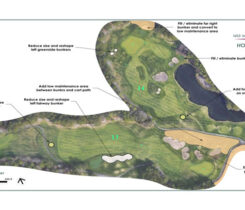





Tim Liddy, ASGCA, uses lessons learned from Pete Dye to restore The Bridgewater Club in Indiana
The author of this article is Tim Liddy, fellow of the American Society of Golf Course Architects (ASGCA) and owner of Tim Liddy and Associates.
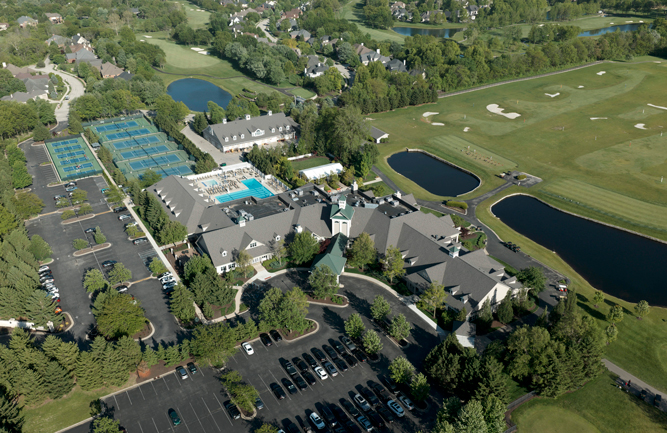
Working alongside Pete Dye for nearly 30 years, learning his approach to golf course design was both a privilege and an honor. A recent project gave me the opportunity to restore a Pete Dye golf course that I helped him design. The Bridgewater Club, located in Carmel, Ind., was built in 2005.
When we approached the restoration of The Bridgewater Club, our goal was to sharpen the presentation while preserving the strategic DNA of the course.
Dye’s designs are built around angles, options, deception and decision-making. As we evaluated the restoration, the non-negotiables were the routing, strategic corridors, green relationships and overall character of each golf hole. We wanted the course to feel refreshed — not redesigned.
Greens
The greens were at the heart of the restoration. Rebuilding them allowed us to improve agronomics, drainage, consistency and long-term sustainability while greatly enhancing day-to-day playing conditions.
Just as importantly, the greens continue to reward players who approach from the proper angle in the fairway — a hallmark of Dye’s strategic philosophy. Preserving those relationships was essential to maintaining the integrity of the original design.
Tees
We also added forward tees on seven holes to make the course more enjoyable and accessible for golfers of all skill levels. These additions create more options for play while preserving the challenge and strategic intent of the course.
Bunkers
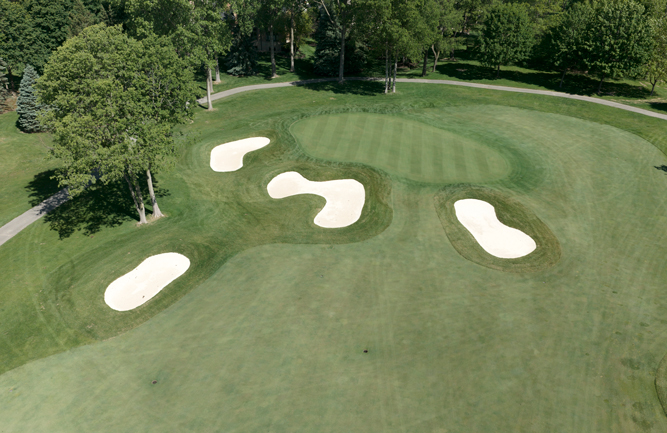
Every bunker at The Bridgewater Club was renovated with new shaping, drainage, and sand. We evaluated each bunker through both an architectural and playability lens.
The Dye language of strong lines, visual contrast and strategic placement guided every decision. Some bunkers were essential because they defined strategy, framed landing areas or influenced the preferred angle into a green. Others had become more punitive than strategic, particularly for higher-handicap players, and were adjusted accordingly.
Turf
The finishing touch on the restoration was a custom turf blend selected specifically for The Bridgewater Club and the unique growing conditions of central Indiana. The blend, aptly called The Bridgewater Blend, includes two types of fescue making up 80 percent of the mix and two types of bluegrass making up 20 percent of the mix. We utilized 007XL bentgrass for the greens. As for the green surrounds, bunker faces and 40 acres of overseeded rough, we used a blend of fescue and bluegrass. The turf provides improved drought tolerance, durability and year-round playability.
The new turf supports the long-term health of the golf course while preserving Dye’s vision for future generations of golfers.
Preserving a legacy
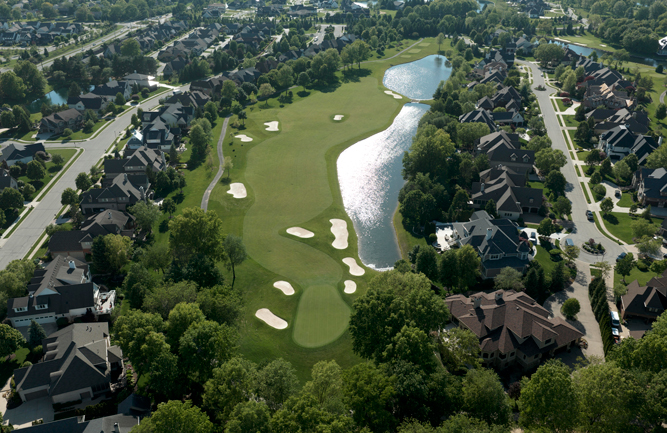
Restoring The Bridgewater Club was truly a labor of love. The project provided an opportunity to honor Dye’s architectural vision while ensuring the course remains enjoyable, strategic and sustainable for years to come.
I believe Dye would be proud of the final result — a course that remains true to its original character while meeting the expectations of today’s golfers.
Subscribe to Golfdom



If you enjoyed this article, subscribe to Golfdom to receive more articles just like it.