




Research

Photo by: Gregg Munshaw.

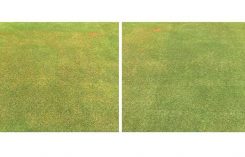
Winter bermudagrass overseeding: Does it hurt or help?

Bermudagrass (Cynodon dactylon) is the choice for golf course fairways and tees in the South and in the Transition Zone because it tolerates close mowing (less than 3/4 inch) and forms a dense, durable and persistent turf. One of the ...

Read More
Photo by: Damon Smith

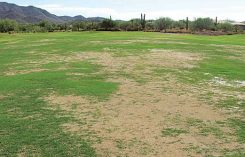
Predicting dollar spot just got easier

As spring approaches, some especially devastating diseases once again rear their ugly heads. Argued to be the costliest disease of turfgrass worldwide, dollar spot will be on a lot of minds and in a lot of budgets. With warmer temperatures, ...

Read More
Photos by: Mark newton (1,2), Syngenta (3), Bruce Martin, Ph.d. (4, 5), Derek Settle, Ph.D. (6)

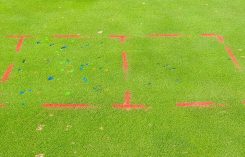
Invisible intruders

March 26, 2018 By
In the summer of 2015, Mark Newton, CGCS at Canyon Farms Golf Club in Lenexa, Kan., was worried he might lose his job. He and his two assistant superintendents were spot-watering greens up to five times a day. His greens ...

Read More

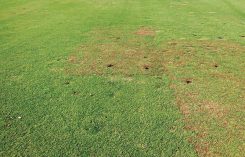
Hydrocarbon machine fluid injury on greens: What do we know?

March 26, 2018 By
Motorized turfgrass management equipment uses hydrocarbon-based machine fluids, including fuels, lubricants and hydraulic oils. Leaks of these machine fluids injure turf, especially on greens (Photo 1). The most pronounced visual symptom of machine-fluid injury is an area of turf exhibiting ...

Read More
Photo by: Mike Richardson, Ph.D.

Spring bulbs add color to dormant warm-season turf

March 26, 2018 By and
Warm-season turfgrasses in the Transition Zone can go dormant for up to six months of the year. Early-spring bulbs add color to dormant lawns, yet their persistence in the turfgrass environment largely is unknown. In addition to aesthetics, flowering bulbs ...

Read More
Photos: Lee butler (1A, 1B, 2B, 3A, 3B), Bruce Martin (2A)

Demystifying Pythium diseases of golf course turfgrasses

February 26, 2018 By and
Pythium diseases are exceptionally important in turfgrass management. Yet, these diseases are oversimplified in how they are presented in the literature and commonly confused with one another. For example, in the “Compendium of Turfgrass Diseases,” Pythium diseases are lumped together ...

Read More