




A look back at the meticulous mind behind the 2018 U.S. Open setup
Editor’s note: The following article is pulled from the archives, a shortened version of Golfdom’s 2018 U.S. Open preview story on Jon Jennings and Shinnecock. Look for new content from the 2026 U.S. Open — sponsored by PBI-Gordon — online in June.
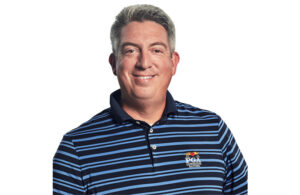
The day Jon Jennings accepted the job at Shinnecock, he achieved a golf historian’s dream: He left a job at one of the five founding member clubs of the United States Golf Association (Chicago Golf Club, founded in 1893, the oldest 18-hole golf club in America) for another of the five founding clubs (Shinnecock Hills’ original 12 holes date back to 1892; its clubhouse, the oldest in America, was built the same year).
“It still gives me chills when I’m out there on the golf course thinking that I’m actually at Shinnecock,” Jennings says. “I knew it would be an amazing place to work … I never thought that I’d actually be here.”
His lifelong friend Pat Sisk, CGCS at Milwaukee CC, wasn’t at all surprised by Jennings’ success.
“Agronomic skills are one thing, many of us possess agronomic skills,” Sisk says. “It’s his organizational skills, the ability to plan and communicate among 10,000 different avenues … that’s what separates guys who can handle these majors and the also-rans.”
Restoring a classic
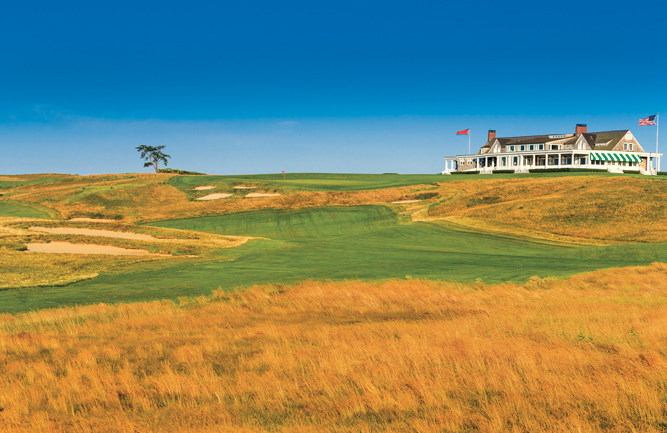
Jennings and his crew took meticulous steps to narrow some fairways with the beautiful wispy fescue grasses for which Shinnecock is famous. Another delicate project coincided with the long-term tree removal project — a tree addition project to the north side of the property, using trees from the course to create a natural fence between the course and houses. Lastly, perimeter areas of the course that were scattered with woods, new growth over the last few decades, were removed to recapture as much of the golfing grounds as possible.
The result is a course with epic views that can be deceptive at times in how far the eye can see.
“It’s getting back to how the course looked if you would have come out here in the late 1800s when people first started playing golf here, that open look where you have scruffy native areas and sand,” Jennings says. “The vision of the course is to be able to look across and have vast expanses of these open vistas that you can just see from anywhere.”
Attention to detail
Those who know Jennings well say two attributes have led to his success: his attention to detail and his organizational skills.
“It’s almost a curse, but it’s helped me be successful in what I do,” Jennings says. “I’m looking for something that’s wrong, all the time, everywhere I go. And by doing that, I’m going through the golf course and looking for something that’s out of place, or not right, and I’m bringing people in to correct it.”
“He’s about the most organized guy I know, and he’s always been motivated,” Sisk says. “He’s the type of guy, when he gets his mind put to something, he goes at it with blinders on. His success in the industry is proof that if you really dedicate yourself, good things happen.”
Jennings says he is proud of his career, and he clearly wants to be right here, counting down the days to the 2018 U.S. Open.
“Being in metropolitan New York, the pace and the tension and, I’ll call it the stress of the area, really suits my personality,” Jennings says. “I like that kind of wound-up, anxious feeling all the time. These things fit together — my personality, the area and the level that we’re requested to keep the golf course.”
Subscribe to Golfdom



If you enjoyed this article, subscribe to Golfdom to receive more articles just like it.