




The Turf Doc: A case of ‘What’s that?’

Maintaining annual bluegrass golf courses is often challenging and sometimes a surprising endeavor. A well-maintained annual bluegrass provides an excellent playing surface both on greens and fairways. However, there are ongoing challenges throughout the season. Spring brings pests like annual bluegrass weevil and pathogen infections for diseases like summer patch. Winter brings injury from pathogens and environmental conditions like ice cover, freeze injury and desiccation. Summer includes environmental stresses like heat and drought, along with the potential for a plethora of diseases.
Even during times of the year when annual bluegrass is healthy and conditions are favorable for growth, something invariably out of the normal appears. I like to call these maladies “What’s that?” Those issues you face when walking down a fairway or across a green, and without any warning or disruption, an abnormality to the turf appears. Two abnormalities that occur that trigger a response like “What’s that?” are annual bluegrass etiolation, or mad tiller disease, and white leaf.
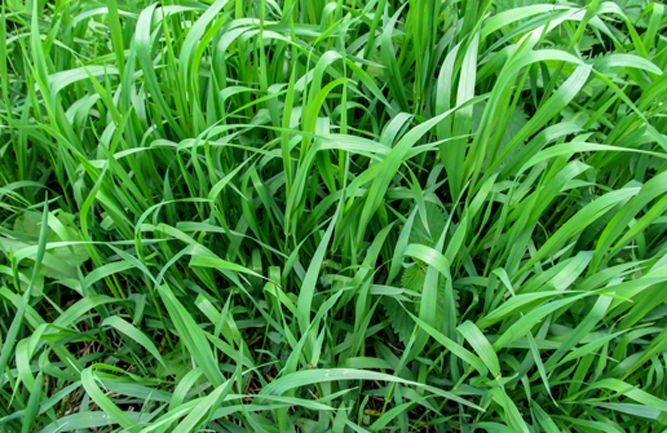
Etiolation of annual bluegrass symptoms appear as abnormally long shoots and leaves. These plants have grown rapidly, becoming thin and elongated. These elongated leaves may show chlorosis, with a yellow to pale-green color. Over time, the turf patches may become thinner, and some root loss may occur.
Etiolation of annual bluegrass occurs during a period of cloudy, wet conditions. The duration of favorable conditions may range from less than a week to longer. The symptoms are similar to what you would expect from low light conditions. Plants tend to elongate when shade or reduced light occurs. Initially, the malady was solely associated with low light. However, further research revealed that a bacterium Acidovorax avenae subsp. avenae was associated with causing the symptoms. It is believed that the bacterium disrupts the plant’s natural hormone balance, leading to the abnormal etiolated growth. The name mad tiller disease is associated with the bacterium pathogen.
Given the bacterium disrupts the plant’s hormone imbalance, some plant growth regulators (PGR) have been shown to induce or worsen etiolation. Some have suggested that avoiding PGRs may be a way of reducing the etiolation. I have tended to encourage removing etiolation through mowing after a PGR application versus stopping treatment.
One additional disease that occurs during wet cool conditions in the fall and may cause confusion with mad tiller disease or etiolation of annual bluegrass is yellow tuft. Yellow tuft occurs in late summer and can produce yellow spots. The fungal pathogen is Sclerophthora macrospora. Leaves and tillers are yellow and clustered due to a fungal-induced proliferation of tillers. These tillers are often abnormal in that they appear swollen. Yellow tuft is best controlled with fungicides applied preventatively. Often the disease is left to run its course.
White leaf is what it says — white leaves of annual bluegrass appear in clusters, sometimes occurring in other turfgrasses, too. The leaf appears white or bleached out due to the degradation of chlorophyll. The pathogen is a phytoplasma, which is classified in a group of similar prokaryotic organisms known as mollicute. The difference between normal bacteria and mollicutes is no cell wall is present with mollicute organisms. Phytoplasma appear to be transmitted through leafhoppers which deposit the pathogen in the plant’s phloem. With white leaf, there is not much you can do. Basically, you wait for symptoms to disappear on their own.
When managing annual bluegrass, you’re never on cruise control. During periods when one would expect annual bluegrass to be thriving and doing well (and it does), a disruption occurs. It is those minor “What’s that?” issues that sometimes require that you may just be better off letting them go.
Subscribe to Golfdom



If you enjoyed this article, subscribe to Golfdom to receive more articles just like it.