Research

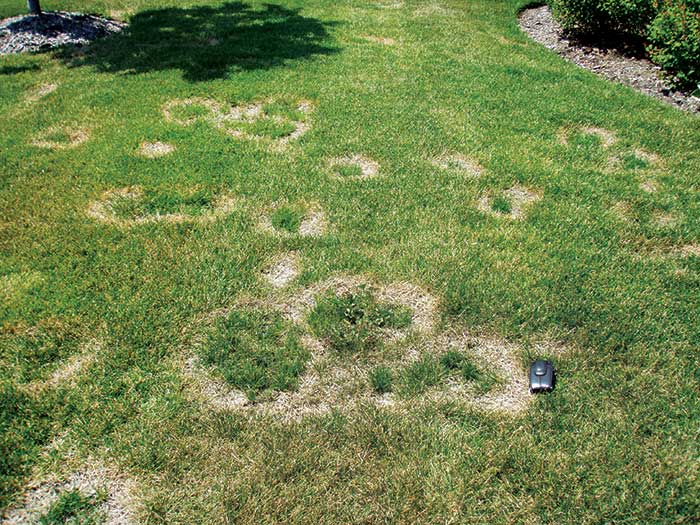
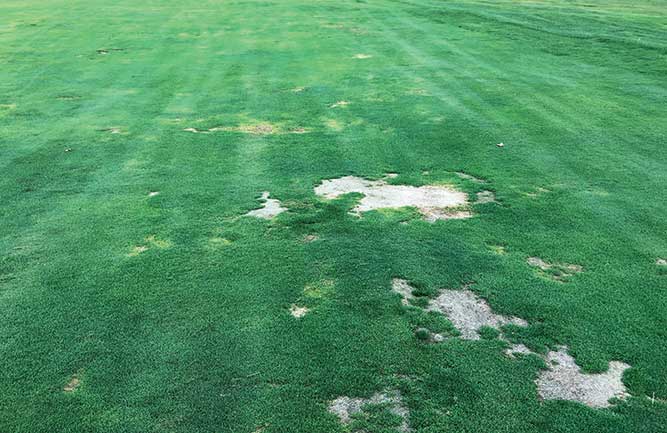
Necrotic ring spot often appears in Kentucky bluegrass where the organic layer under the soil has built up. (Photo: photo by: Paul Koch, Ph. D.)

Know the signs of necrotic ring spot in turf

April 15, 2021 By
The opportunistic pathogen of necrotic ring spot looks for Kentucky bluegrass turf with a thick, lush organic layer to thrive. Follow these tips to keep the pathogen at bay. ...

Read More
Photo:

Nematodes on the March

Nathaniel Mitkowski, Ph.D., discusses the best testing and control methods for nematode populations on golf courses across the U.S. ...

Read More
Thatch can be controlled by implementing practices such as topdressing, aerification and verticutting. (Photo: Bob Harper)

Experts’ Insights: Thatch meets its match

March 23, 2021 By
Manufacturers and superintendents alike explain the best practices that can be used to help control excessive thatch on golf courses. ...

Read More
Damage caused by ground pearls on a bermudagrass putting green. Symptoms often include initial thinning and texture changes, followed by loss of turf in the forms of straw or bare soil. (Photo: David M. Kopec)

Control of ground pearls using application sequences of different insecticides

March 18, 2021 By
Ground pearls are a problem on courses in desert conditions, but applying closely timed rotations of performance-based insecticides shows control promise. ...

Read More
While spring dead spot symptoms show up after green-up, key control happens in the fall. (Photo: Nathan Walker)

Experts’ Insights: Start off spring on track

March 4, 2021 By
Experts share how you can help give your turf a leg up during green-up when it comes to spring dead spot on bermudagrass. ...

Read More

The fate of fungicide

March 2, 2021 By and
Researchers assessed the fate of pyraclostrobin, triadimefon and penthiopyrad following various post-application irrigation and mowing treatments. ...

Read More