




How three years at Rehoboth Beach CC changed a veteran superintendent
I recently passed my third anniversary at Rehoboth Beach Country Club (RBCC) which got me thinking how different the three years were from the previous 19 I spent at LedgeRock Golf Club (Mohnton, Pa.). I knew changing jobs after 19 years and learning a new property was going to teach me some new things, but I didn’t know it could be that different.

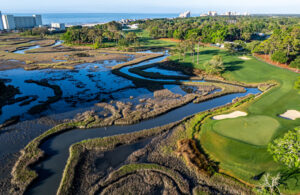
I was told I’d have to learn about the tides at RBCC, but I didn’t expect to become quite so familiar with them. Added to that was the associated saltwater intrusion and trying to get water off a golf course that at 1.5 feet above sea level means the water doesn’t really have anywhere to go. This means waiting for low tide and opening tide gates and closing them again before high tide so the water doesn’t rush back in. That was not something I had dealt with in the hills of Pennsylvania where drainage is a little easier as there is some fall!
The club was looking at a renovation to freshen it up, but I quickly realized they’d have to look at it in a completely different way. There wasn’t much point in rebuilding bunkers, regrassing everything and making the course look great if it was still going to flood.
So, now the plan is about fixing the underlying problems and getting the water off so every storm is not a gamble on whether the turf will survive the flooding or not.
The one I was prepared for was to learn about bermudagrass, as the club had been using cold-tolerant bermudagrasses with really good results. Then we had this past winter…
Delaware had some of the coldest temperatures and the most snow in decades, along with extended ice cover. Spring came and the bermuda wasn’t doing much. We kept blaming soil temperatures because they struggled to get consistently above 65 degrees. Surely it was going to wake up. Some did and it gave hope, but a lot didn’t. We waited as long as possible so we wouldn’t have to sod, but the inevitable happened and the sod trucks rolled in — and in a year where the winter projects finished up early and aeration was out of the way, we were now back into project mode. Five trucks of bentgrass and two of bermudagrass later, the 15th hole was somehow open within two weeks and had a great playing surface for the Delaware Amateur.
So now there was a big grassing decision for the future. How could I stand in front of the membership and say, “You know that new grass that died on 15? Well, we’re going to put that on the whole course.” Being at the beach, June, July and August are incredibly busy. We have play basically from dawn until dusk, so having a grass that loves those conditions and can handle that traffic made a lot of sense. On the other hand, bentgrass is good all year, is green in the spring and fall, and if it does die in summer, seeding it in the fall is a lot nicer than sodding in the middle of the season — and I NEVER want to do that again! Even if there are going to be some days in August when I’m looking at it and wondering why I ever thought going with bentgrass was a good idea.
Ask me in five years, at that point I better fully know the course — like where the water goes (and where it doesn’t), where the grass struggles and what weather is going to cause problems before the problems even show up. I didn’t think changing courses could teach me so many new things so fast.
But maybe one of the benefits of growing is knowing enough to know that you still have a lot to learn. Except for bermudagrass — in the words of Bob Seger, “Wish I didn’t know now what I didn’t know then.”
Subscribe to Golfdom



If you enjoyed this article, subscribe to Golfdom to receive more articles just like it.