





Tour Guide 2026: RBC Canadian Open
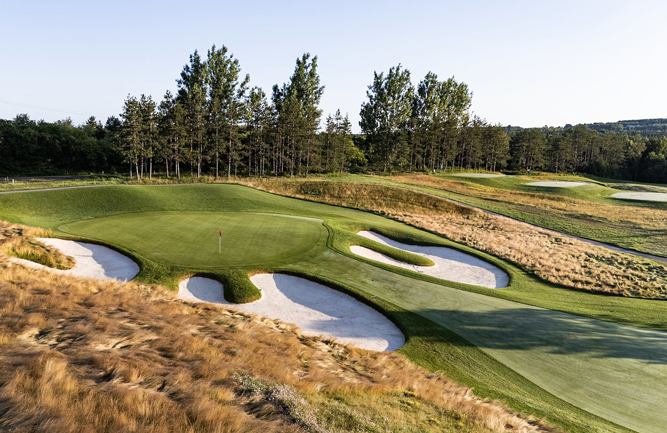
Over the years, TPC Toronto at Osprey Valley has hosted a variety of high-level championships. But none have compared to the PGA Tour’s RBC Canadian Open, according to David Hunter, superintendent of the Hoot and North Courses.
After all, Canada’s national championship is “on another level when it comes to the spotlight being shined” on the North Course. While reflecting on last year’s and this year’s tournament (the North Course has hosted it since 2025), he has noticed a change in expectations.
In particular, his team’s expectations and his own have increased in two main ways: how the North Course will look and how it will play. Above all else, these expectations are driven by the fact that “thousands of on-site spectators and millions of worldwide viewers” will see their work.
“For our team, one of the greatest challenges is not thinking about those expectations too much and instead focusing on the day-to-day operations that help us achieve our goals and exceed them,” Hunter says. “With a year under our belts now, we know what that process is like and can head into 2026 with an even clearer plan of what we aim to accomplish and how we want to do it.”
A quick turnaround
Due to the North Course’s location in Caledon, Ontario, Hunter and his team have a quick turnaround between the time in which snow melts until the RBC Canadian Open begins in early June. Last year, the team experienced an especially fast turnaround when compared to the norm.
For Caledon’s standards, spring arrived very late. How late? Well, according to Hunter, there was still snow on the ground less than 50 days before PGA Tour members teed off during the RBC Canadian Open’s first round.
“Waiting for the turf to wake up and start growing to the point where we can really get conditions where we want them to be in that short of a timeline is certainly a challenge,” Hunter emphasizes.
Nonetheless, the tournament was a huge success; the North Course was pristine, and thousands of spectators witnessed Ryan Fox defeat Sam Burns in a four-hole playoff.
“Knowing what we accomplished last year gives us plenty of confidence about what we can do for 2026,” he adds.
Installing Spiio soil sensors
Aside from his team members’ hard work, training and commitment, the North Course’s success — as a first-time PGA Tour host in 2025 — may have been due to his team’s installation of Spiio soil sensors on some of the North Course’s greens. Through these sensors, the team acquired “remote, real-time measurements” on various aspects of turf health, including moisture, salinity and temperature.
In turn, Hunter and his team were able to visualize any potential areas of concern in real time, enabling them to react to issues and solve them quickly. Each morning, his team had “a general snapshot of how the greens were holding moisture,” which was critical throughout the tournament.
“Having the ability to monitor moisture levels at any time helped us prepare for tournament play,” Hunter says. “(It) gave us the best chance of creating optimal playing conditions during tournament week, as well as throughout the golf season.”
More than a golf tournament
In addition to the soil sensor installation, the North Course was renovated extensively in 2023 under course architect Ian Andrew’s guidance. To ensure the course was “a championship venue that could test the world’s best players,” according to Hunter, FlightLine Golf (particularly its owner, Spencer Adams) was also hired as a contractor.
Through Andrew’s and FlightLine Golf’s efforts, new tees were constructed, fairways were narrowed and new shortgrass areas — around many green sites — were created. Each bunker was renovated and reconstructed too via the Better Billy Bunker system.
Before the 2025 RBC Canadian Open began, roughly 70 staff members and 30 volunteers were hired to meet every aspect of the North Course’s agronomy needs. Although their backgrounds varied considerably (from superintendents and assistants to suppliers and turfgrass management students), one commonality was observed: their high energy.
“There was so much energy within the team every morning and afternoon during the tournament,” Hunter says. “This was key in the overall success of the event.”
Throughout the tournament week, Hunter noticed a lot of pride as well — pride for the North Course, the event and Canada itself.
“This event is so much more than a golf tournament,” Hunter stressed. “It’s our national open, and so many people take a lot of pride in putting our best foot forward for the world to see.”
Subscribe to Golfdom



If you enjoyed this article, subscribe to Golfdom to receive more articles just like it.