




Research

Photo: Trevor Stacy

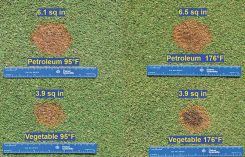
Putting the pH in pH-ungicide mixology

January 8, 2018 By , and
Fungicides are mixed with water and applied as a dilute spray to control diseases on golf course turf. Although published reports show that water quality can influence the performance of certain herbicides, evidence of similar effects on fungicide efficacy is ...

Read More

Clark Talks Turf: Rolling off the greens to save on dollar spot

December 14, 2017 By and
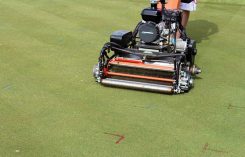
Jay Popko is a research associate in the turfgrass pathology lab at the University of Massachusetts, where he leads field and laboratory research on rolling, fungicide efficacy and dollar-spot resistance to fungicides. You may reach Jay at jpopko@umass.edu for more ...

Read More
Photo: BASF

Monarch (butterflies) of the links

December 1, 2017 By
Monarch butterfly populations have been declining in the United States since the late 1990s. One of many factors contributing to the decline is the shrinking number of milkweed plants, which are critical to their reproduction cycle. The monarch migration starts ...

Read More

Controlling annual bluegrass where the buffalo roam

November 9, 2017 By
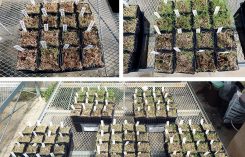
Annual bluegrass (Poa annua L.) control has been thoroughly researched in cool-season turf east of the Mississippi River, but little research has been done in the northern Great Plains. Growing conditions, weather, desired species, as well as biotypes of annual ...

Read More

Suppressing zoysiagrass in cool-season turf

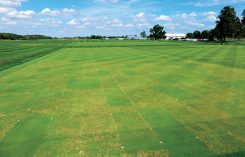
Zoysiagrass (Zoysia japonica) is a desirable turfgrass for golf courses in the Transition Zone because of its low maintenance requirement, but it can become invasive when it spreads via rhizomes and stolons into adjacent areas where it is unwanted. Further, ...

Read More
Photo: Jim Murphy

False-green kyllinga control in cool-season turf

October 23, 2017 By and
False-green kyllinga (Kyllinga gracillima) has become increasingly problematic in the Mid-Atlantic and Northeast. False-green kyllinga is related to yellow nutsedge (Cyperus esculentus), and both species have a triangular stem. Yellow nutsedge typically is interspersed within the turfgrass canopy, while false-green ...

Read More