





Featured

East Lake Golf Club (Photo: David Mjolsness/John Deere)

2019 Tour Championship preview: August in Atlanta

August 5, 2019 By
Yes, you’re sitting back, relaxing and reading the July issue of Golfdom, but for the crew at East Lake Golf Club — the permanent home of the Tour Championship — August looms. This year, the Championship will be held Aug. ...

Read More
Photo: Hal Phillips

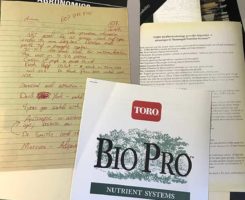
When Toro was a fertilizer company — the forgotten tale of BioPro

July 31, 2019 By
If you tried to explain to millennial superintendents the BioPro Phenomenon — whereby iron and irrigation giant Toro briefly went into the fertilizer business during the 1990s — they might not believe you. But should you engage a slightly older ...

Read More
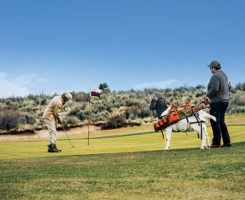
Goat on golf course (Photo: Silvies Valley Ranch/KemperLesnik)

Four-legged loopers

July 30, 2019 By
Silvies Valley Ranch is home to four golf courses. It has an 18-hole reversible course, a 9-hole course for warmup and family rounds and a 7-hole challenge course called McVeigh’s Gauntlet. Reversible courses are unique, but overall, there’s nothing strange ...

Read More
Goosegrass (Photo: Jim Brosnan, Ph.D.)

Trouble with goosegrass control

July 25, 2019 By
Goosegrass (Eleusine indica) is a problematic annual grassy weed found on golf course turf across the United States in summer. This species germinates from seed each spring, with emergence typically occurring several weeks after superintendents begin to see summer annual ...

Read More
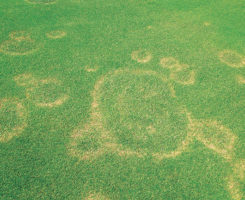
Fairy ring (Photo: Nufarm)

Experts’ Insights: Fighting fairy ring

July 23, 2019 By
Fairy ring manifests as circular or arc-shaped patterns in turf that can vary from just a few feet to more than 20-25 feet in diameter. The patterns will look different, depending on which of the three types of fairy ring ...

Read More
The scenic Nutters Crossing Golf Club in Salisbury, Md., where Pat Riebe is superintendent. (Photo: Pat Riebe)

Kabuto: Spring dead spot’s archnemesis

July 16, 2019 By
As a severe disease of warm-season turfgrasses, spring dead spot (SDS) is managed throughout the Transition Zone of the United States. Caused by a fungal infection that occurs in the autumn months (particularly as warm-season turf is approaching dormancy), SDS ...

Read More