Featured

Photo Background: Dimitris66/DigitalVision Vectors/Getty Images

Presenting Golfdom’s 2022 Supers’ Choice Award winners

November 29, 2022 By
We asked superintendents to share their top products of 2022 and some of the all-time favorites they have used over the years. ...

Read More
Photo: Ohio Golf Course Superintendents Association

Three Ohio GCSAs merge to form Ohio Golf Course Superintendents Association

November 21, 2022 By
The Central Ohio GCSA, Northwest Ohio GCSA and Miami Valley GCSA merged to form a single entity named the Ohio Golf Course Superintendents Association. ...

Read More
Tim Hiers, CGCS (Photo: Anuvia)

Anuvia Legend Tim Hiers, CGCS, shares the traits of successful turf pros

November 14, 2022 By
Anuvia Legend Tim Hiers, CGCS, discusses the characteristics of successful turf pros and what day stands out to him in his career. ...

Read More
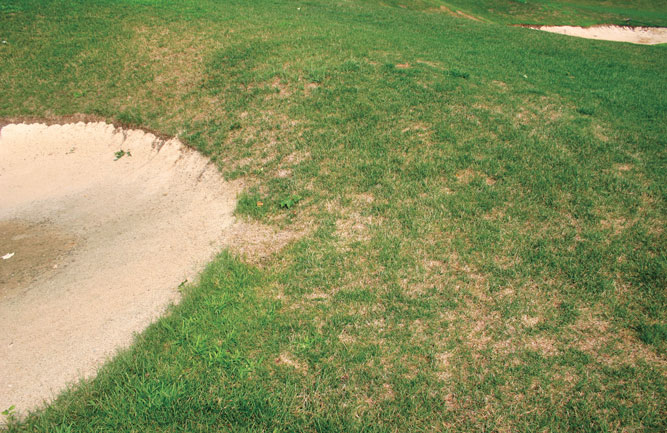
This superintendent assumed this damaged bunker edge was from drought conditions, but upon closer examination, the damage was the result of bluegrass billbug larvae. (Photo: David Sheltar, Ph.D.)

Turf Pest of the Month: Don’t be fooled by billbug damage

November 11, 2022 By
David Shetlar, Ph.D., entomology professor emeritus, shares the importance of knowing the difference between spring dead spot and billbug damage. ...

Read More
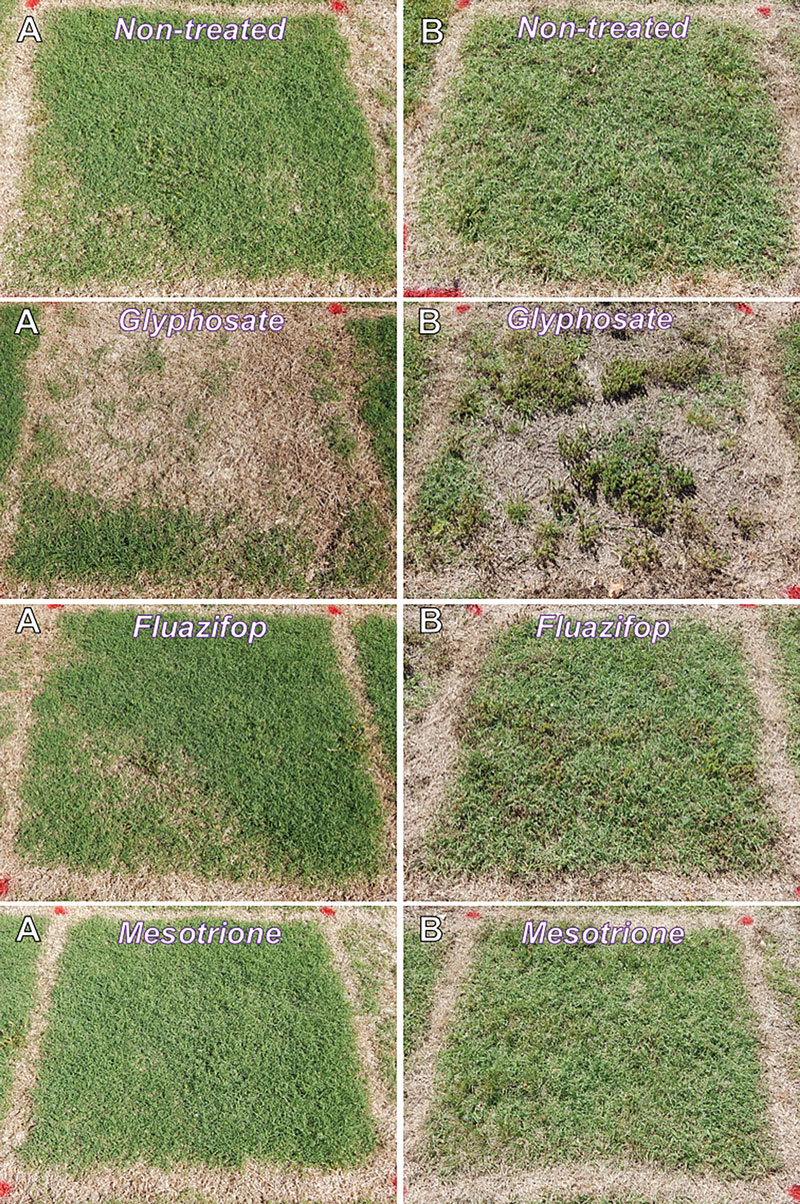
Figure 1. (A) ‘Midlawn’ bermudagrass plots and (B) common bermudagrass plots on June 12, 2014 (252 days after application on Oct. 3, 2013) recovering from autumn applica- tions of glyphosate, fluazifop and mesotrione combinations. All other treatments containing glyphosate (not pictured) had a similar percentage of green cover as glyphosate plots and plots treated with fluazifop and mesotrione (not pictured) had a similar percentage of green bermudagrass cover as those treated only with fluazifop. (Photos: Jared Hoyle, Ph.D.)

Efficacy of late-season bermudagrass removal using herbicide combinations

October 31, 2022 By and
Researchers examine the efficacy of late-season bermudagrass removal using glyphosate, mesotrione and fluazifop herbicide combinations. ...

Read More
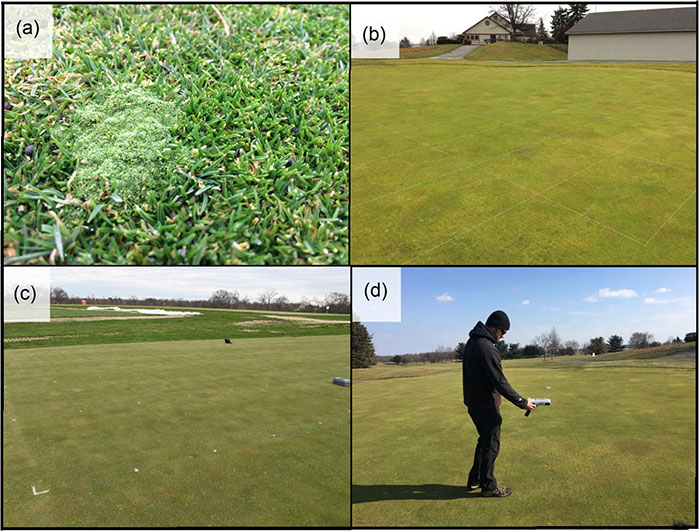
FIGURE 1: (a) Silvery-thread moss growing in nontreated control plot at Hawks Nest Golf Course in Creston, Ohio, at four weeks after treatment (WAT); (b) Experimental plot area at Hawks Nest Golf Course at trial initiation; (c) Experimental plot area at Rutgers Horticultural Farm 2 in New Brunswick, N.J., at 12 WAT; (d) Collecting normalized difference vegetation index values at Hawks Nest Golf Course at four WAT. (Photos: Zane Raudenbush, Ph.D.)

Evaluating mid-winter applications of Quicksilver for silvery-thread moss

October 27, 2022 By
Researchers across six northern states evaluated the potential injury of mid-winter applications of carfentrazone-ethyl (Quicksilver, FMC) on putting greens. ...

Read More