




State of the Industry Report: Packed tee sheets and mixed weather dominate 2025
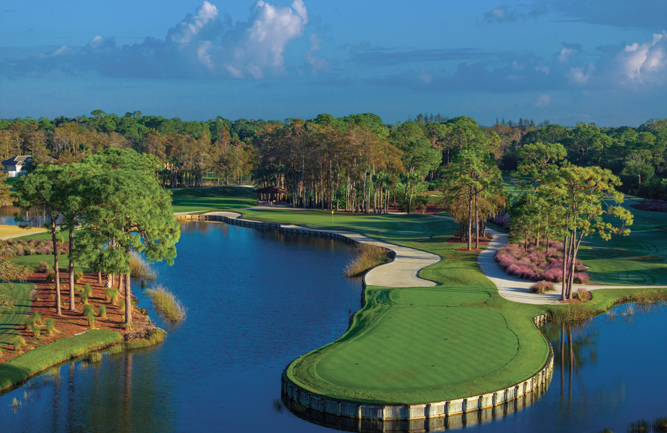
Golfdom’s State of the Industry Report makes its return after a two-year hiatus, thanks to our sponsor Envu. The team reached out to chapter presidents around the country to ask how the golf season treated the magazine’s readers.
Good news: In many parts of the country, Mother Nature was good to superintendents and their crews in 2025.
“It was a little warmer than average, but just ideal for growing grass,” says Paul Venable, president of the Idaho GCSA and superintendent at Warm Springs GC in Boise. “It’s been warm, wet and just at the right times of year. We’ve been really lucky as far as the weather.”
Combine great weather and high golfer demand, and that equals packed tee sheets. Which is both a blessing and a curse.
“It’s good and bad — you’re getting a lot of wear and tear, but overall golf is healthy. You just ride the wave as long as you can, you use it,” says Nate Bolhous, president of the Midwest Association of Golf Course Superintendents and director of grounds at Briarwood CC in Deerfield, Ill. “It’s put a better focus on the golf course. It’s the stress of constantly packed tee sheets, but at least more guys are getting equipment. More guys are getting to do renovations and improvements.”
What follows are interviews with nine different chapter presidents. The interviews are shortened here for space — to read the complete interviews, visit Golfdom.com.
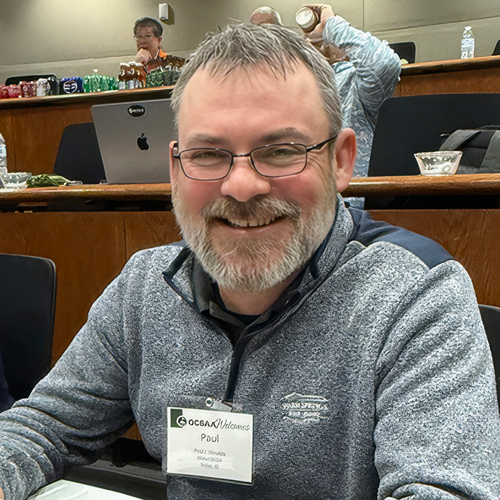
Paul Venable
President, Idaho GCSA
Superintendent, Warm Springs Golf Course, Boise, Idaho
How was this year’s golf season in your region?
We’re one of the busiest courses in the valley here, but even talking to other superintendents around the area, golf has really picked up. It’s been busy; we built a new clubhouse, so we’ve been extra busy. But, golf in general has really, really picked up.
What was the labor pool like this year?
We were lucky as far as labor. We have kind of a returning staff, generally, of retired guys that want something to do, and the free golf doesn’t hurt. We’ve also had an influx of college kids the past few years, and this year, because of the project we’re working on, we got both. I know here recently, a lot of courses were having a labor issue, but we really haven’t been hurting that much labor-wise. The superintendents I’ve talked to, they’re pretty happy with their staffing. I think it’s been good for our area.
Any notable success stories for your chapter or region this year?
We’ve undertaken this huge project building a new clubhouse, and they decided to make us the landscape contractor, so we did all the landscaping in-house. We’ve built several greens and stuff like that all in-house, so it’s been wild — something that most courses wouldn’t do in-house, but it’s been a real learning experience.
What are your expectations for 2026?
I hopefully don’t see (golf) slowing down. I mean, if anything in our area, we could fit another course or two. Golf has really picked up, and hopefully that’ll come about. Golf has boomed and waned over the years. Right now, we’re on the boom trend, so I don’t foresee it slowing down immediately.
— N.M.

Brent Austin
President, Inland Empire GCSA
Superintendent, La Grande (Ore.) CC
How was this year’s golf season in your region?
This year was actually quite a nice year for golf in my region. We were able to fill our tournaments. In the last couple years since COVID — even before COVID — we weren’t filling our tournaments as full as they used to be prior to that. And just with the change in economy and everything else going on in the world, I think people were getting away from golf. But this year — really the last couple years — each year has gotten better and better. We had all our tournaments filled months in advance. Prior to that, we’re scraping, keeping the deadline open to enter the tournament until the day before. So, it was really good in that respect.
Overall, how was the weather?
This year’s weather was different for us in that it was probably better for us. We didn’t get the hot-hot like we sometimes do. We kind of stuck in that 80-90-degree weather through most of the summer. And, normally, we’ll hit 100 for one to two weeks, but this year, I think we had one day in the triple digits, and everything else was 95 and lower. We didn’t have to worry about the heat stress that we normally have in the years past, and with that, we were able to keep things greener. It was a little easier to keep the consistency in our green speeds because we didn’t have to monitor our watering with the heat and everything else quite as much. We’ve had a good start to the winter already.
What was the labor pool like this year?
This year, it seemed like I was able to get the employees I needed without any trouble, and I got good employees that wanted to learn and do well in the job that they were doing. They were always wanting to try new things, mow new directions and really put that little extra effort into making it look good. They would see something on TV at a tournament and be like, “We want to try this.” It was actually a good year for me in the labor pool.
What are your expectations for 2026?
I like to be optimistic in that things are going to be at least just as good or even get better for my own course. I always hope to see what struggles we did have with this patch of grass here, there, and say, “Hey, you know what? We’re going to make that better.” I’m hoping the weather gives us the same thing we got this year because it was very helpful to not have that stress from the heat, and that makes life easier on the job.
— N.M.
Joe Budinich
President, GCSA of Northern California
Director of Agronomy, The Peninsula G&CC, San Mateo, Calif.
How was this year’s golf season in your region?
It was easier this year. We had a pretty cool summer, and I feel like there wasn’t much turf loss in this area due to the summer months.
What was the labor pool like this year?
I feel like it was great this year. We didn’t really struggle keeping the full staff. Talking to other superintendents, I heard pretty much the same. It doesn’t seem like people really struggled to keep full staff this year.
Did you have any success stories for your chapter or for your region this year?
We had a few national events that were hosted here. The Walker Cup was hosted at Cypress Point down in Monterey. Then the U.S. Amateur was hosted at Olympic Club in San Francisco. And then Monterey Peninsula, they hosted the U.S. Women’s Mid-Am. So we kind of had three major, national events that were hosted in a small area.
What are your expectations for 2026?
I’m a person that tends to be on the cutting edge. I have nine automowers, and then I have a drone that we fly over our property every day that we use for thermal imaging to basically be able to use as data to set water off of. I feel like with technology continuing to improve and becoming more and more prevalent in our industry … the goal is that the job just continues to get a little bit easier each year, or a little bit more efficient.
— P.S.
Matt Hall
President, Iowa GCSA
Superintendent, Burlington (Iowa) GC
How was this year’s golf season?
Here at my golf club, rounds were about the same as they’ve been for the past four to five years. We increased our outings this year, and I don’t know if that was just because of some of the other places in town were maybe turning them down. I’m not sure why, but here at my golf club, the total number of rounds was pretty close to the same.
How did the weather treat you?
I’m the president of the Iowa chapter, but my golf course is clear in the southeast corner of the state, along the Mississippi River. So, as you know with any other state, the weather can change, and just within 10, 15 miles, sometimes 10 or 15 seconds. I know me and some of my guys that I talked with close to me had a super wet July. I think I measured 13 to 14 inches in the month of July. I talked to some guys who were up close to 19 inches who were within 40 miles of me.
It was a wet one, and turf struggled. My turf, fortunately, we were able to stay on top of it and keep things dried out and poke some holes and do everything we could to mitigate Mother Nature’s issues. But I know some other places struggled. Either they didn’t have the staff to take care of those things, or they didn’t have the equipment to take care of those things, or they didn’t have the budget to put fungicides down, all that kind of stuff. And when you have some problem areas on your golf course, when you have a July like we just had, they get worse, and it really shows its face.
Mother Nature definitely rules the world and what we can and can’t do. But golf overall, in my neck of the woods, is still going good.
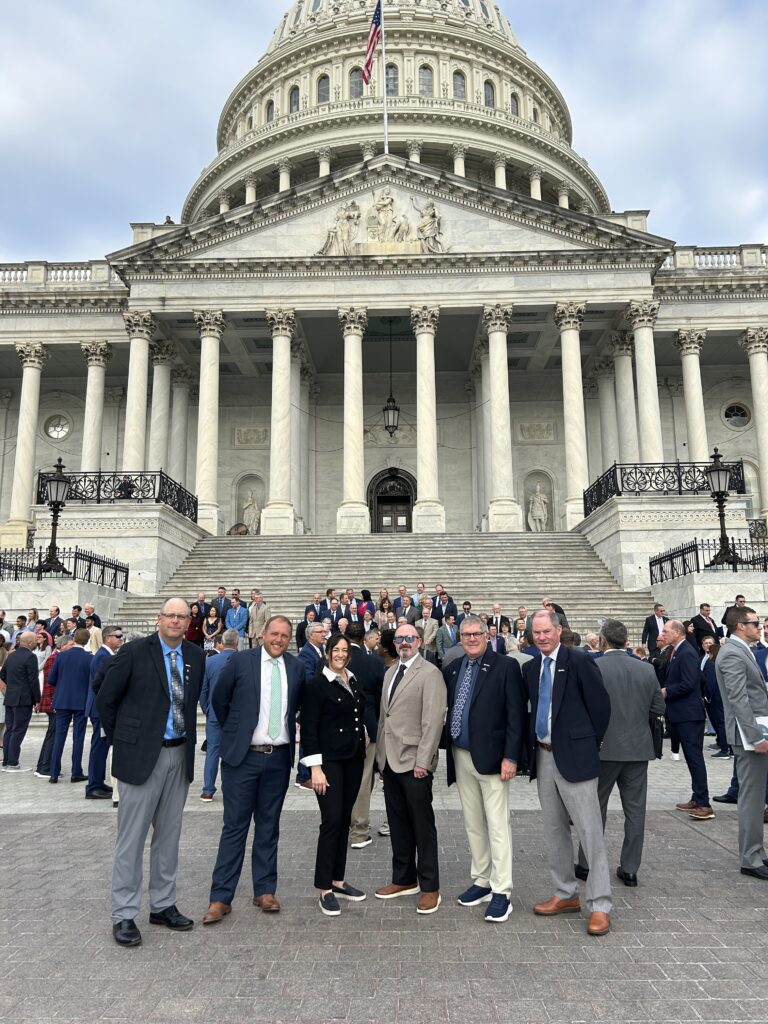
Any notable success stories coming out of the Iowa chapter this year?
Yeah, I do, it’s a sense of pride now because we’ve grown our Rounds 4 Research donations … I think we maybe started with two (rounds) originally, and now we’re up near 40.
Our chapter, just within the last couple of years, is trying to be really involved at the FFA level. We’re trying to get our face at different FFA state-level events. There’s a local school district and community college district that just put up a multi-million-dollar building. A couple of superintendents in that area have been in touch with some instructors. We’re trying to get to these kids early, show them that, if you want a summer job, you don’t have to weed all your life. There are more fun things to it than just that.
What are your hopes for 2026?
My mind tells me that the year is going to start in March, it’s going to be 70, and it’s going to stay 70 until December! I’m kidding. Mother Nature, like I said, she controls us, and every year is different. Weather events just seem to be getting stronger and stronger. I don’t know if it’s worse or better, but it’s very difficult.
It’s a struggle, but it’s a challenge that I love, because we don’t have the same job every day. You know, day to day, maybe it’s kind of the same, but if you look at month to month — it’s changing, and being able to overcome those again for 2026 is a challenge that I love and I look forward to.
— W.C.
Garrett Luck
President, Wisconsin GCSA
Superintendent, Hidden Glen GC, Cedarburg, Wis.
How was your year? How was the golf season?
The golf season was great. Golf is booming still. I didn’t think we’d see it growing like this ever since the Tiger boom, but the post-pandemic boom has been great. I don’t know if we’re going to meet where we were at last year, but it’ll be close, which is still impressive considering last year was a record year. Membership at our club is strong. Throughout the area, it is strong.
How was the weather this season?
May was wet, and then we warmed up, and it got really nice. And then we had record-breaking flooding. In the Milwaukee area specifically, one event we had, in 24 hours, 11 to 15 inches of water. It was a big issue for a lot of courses and clubs, especially where there wer rivers running through them.
But the cool thing about that was seeing how close-knit of a community superintendents are and how they help each other out. Anybody who wasn’t affected too severely was willing to help out, offer equipment or assistance to their neighbors. That was the bright side of a really difficult event. We had our August golf meeting at North Hills CC in Menomonee Falls — suburban Milwaukee — and they were one of the hardest hit. We still had our event weeks after the rain event, but it was shortened to nine holes because they had multiple holes that were still out of play.
How was your labor pool?
Strong. I think you go back three or four years ago, especially during the pandemic and right after, it was a real struggle to find people. It was a challenge. It seemed like college kids were reluctant to work, and even retirees were harder to find. But in the last two seasons, we’ve had to turn away people. It’s almost like you had to apply early. You’d better apply over spring break, because if you wait until May, there’s not room.
I don’t know if it’s specific to our region, but wages have gone up. Pre-pandemic, we’d start high school and college kids with no experience at $9, $10 an hour. And now, if you’re not paying — at least in our market — $15, $16 an hour to start with no experience, people don’t even look at it.
For 2026, what are you thinking? What are your expectations?
I think as long as golf remains strong and the economy remains where it’s at, I think we’re just going to keep on rolling. It’s exciting times.
— W.C.

Alex Tolbert
President, Carolinas GCSA
Superintendent, Orangeburg (S.C.) Country Club
How was this year’s golf season in your region?
Golf around here has really taken off since COVID, and we’ve actually been able to maintain that level. Everybody wants to know if and when that bubble is going to burst, but we’re still riding it, and we’re going to ride it as long as we can. In the Carolinas, we’ve seen an uptick in play that has continued over the last three or four years. I know that at my course, we’re going to do as many rounds this year as we have in the last nine or 10 years, which is great for us.
Overall, how was the weather this year?
It was kind of a normal year in our region, with a few extremes thrown in. We had a little warm weather in January and February, and the grass was trying to figure out if it was spring or not. Then we sat kind of idle for the next couple of months, where the temperatures were warm enough for everything to be green, but not warm enough to really grow. We were really, really warm in May, June and July, then came August with a lot of rain and the warm temperatures. And in September and beyond around here, it stops raining unless a hurricane rolls through, and that’s what we saw. All in all, it was a pretty normal year for us.
What was your labor pool like this year?
It is still a struggle for us and most courses in the region. I know a lot of places did what we did and changed the way they look at things. We used to want full-time guys who could work a set schedule, whether during the week or over weekends, so you could make sure that everything got done. Over the last few years, a lot of us have been a little bit more flexible and tried to actually hire full-time equivalents.
Any notable success stories for your chapter or region this year?
The chapter had a lot of success again this year in raising money for Rounds 4 Research. We cracked the $150,000 mark, which broke our record for the year before. It’s not always easy, but we’ve been able to keep the momentum going, and in the last two or three years, we’ve awarded $286,000 in grants for research.
— S.H.
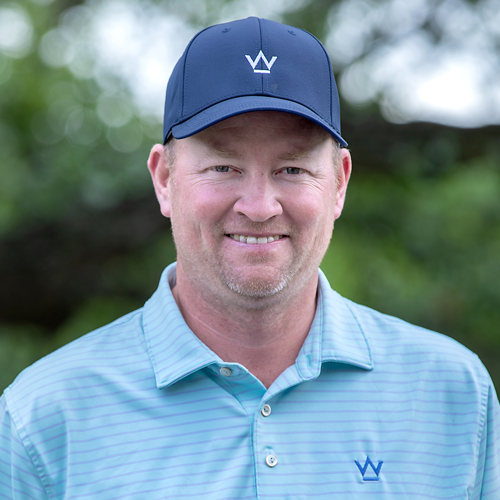
Reagan Olson
President, Central Texas GCSA
Director of Golf Course Maintenance, Westlake CC, Austin, Texas
What was your golf season like there this year?
It was a crazy golf season this year. We play golf year-round here in Central Texas. It was a mild winter, and summer was pretty mild, too. We easily average well over 100 degrees, but we were not even close to that this year.
How was your labor pool?
It’s been pretty difficult to find and retain. The biggest thing is trying to compete with other clubs in the area. I’ve got a good core of about 13 to 14 people. We’re trying to raise pay rates. We offer discounted meal prices. The cost of living in Austin is pretty high, too, so a bunch of my guys have a second job, which we try to work around that.
Any success stories from the chapter this year?
Our association, we’ve increased our 2024 and 2025 scholarships each year. In the past, we’ve had to keep it to a certain number of scholarships. But in the last couple years, whoever signs up pretty much gets one. And then one of the new things that we implemented last year was a crew holiday fund. We took our 50/50 drawings through the year and held some money back at the end of the year. Superintendents nominate one person from the crew, and we help them out around the holidays. We’ve heard some stories from different crew members who are having some hard times, so it’s just something we can do to help out.
— S.J.
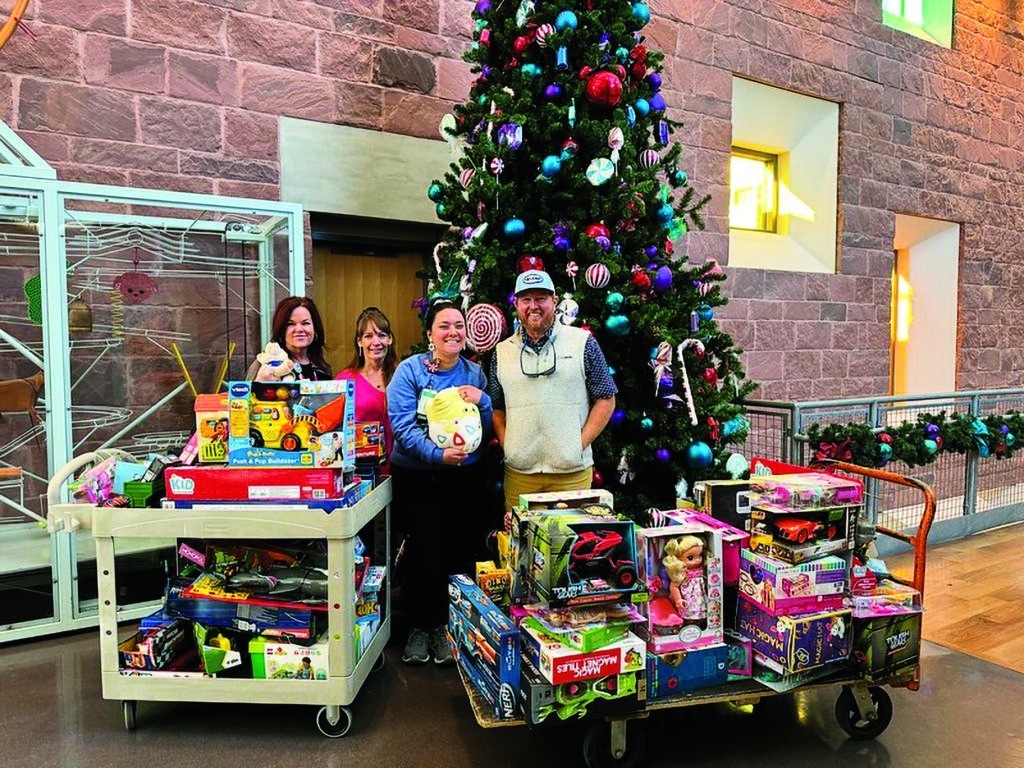

Nate Bolhous
President, Midwest Association of Golf Course Superintendents
Director of Grounds, Briarwood CC, Deerfield, Ill.
Generally speaking, how did the weather treat you guys in the Chicagoland?
I don’t want to call it disappointing, but it was basically a false spring. There was a couple warm days, everybody thought it was going be an early start, and then it just was pretty chilly even through May. A lot of stuff didn’t really get going. And once we hit July, July was pretty rough. For the 15 years I’ve been in this area now, it was one of the toughest Julys. The humidity, it rained nonstop. We had high temperatures. It was really bad. And then, the first two weeks of August, it was just a lot of disease pressure. You’re trying to push conditions, and you have a big club event, it’s just rough. The finish of the year has been good, it’s really been beautiful.
How busy was the golf season?
I know a couple of my buddies down the street, public golf is crazy. The only season we’ve done more rounds was the actual COVID year, and that’s because nobody had anything to do. We’re getting really close to that again.
How is the labor pool there?
It’s good. This is the first year I turned guys away. The GPS mowers, all this stuff is coming. It’s here. I’ve seen some demos. Does it work at my place right now? I don’t think so, but it’s exciting to see. Where we’re going to be five years from now, once it’s better implemented, maybe some more efficient machines as guys are struggling with labor. When you look at the labor pool, you’ll always have to rake bunkers, there’s going to be certain things we always have to do. But the more they can automate rough mowing your large areas … hopefully we can get there.
— S.J.
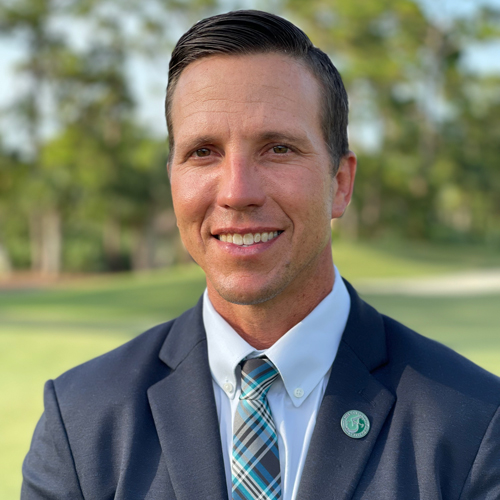
Ryan Swilley, CGCS
President, Florida GCSA
Director of Agronomy, The Dye Preserve GC, Jupiter, Fla.
How was this year’s golf season in your region?
I think it was as strong a season as I can remember. We’ve kind of returned to what seems like a golf boom of courses being built and opening, certainly in my immediate area. It’s been exciting to see the popularity of golf continue to be on the rise and young folks playing the game. With it, we’ve seen the demand for high-quality playing conditions rise as well. As superintendents, we have to continue to become more efficient at what we do and better at saving water and reducing inputs … but overall, it’s an exciting time to be a part of the industry.
Overall, how was the weather this year?
I think the best way I could come up with to describe it would be like a mix of extremes. We didn’t have any hurricanes, which is great. But I think this mix of extremes is the new normal in our area. It seems we had an unusually dry late winter and spring, and then fast forward to late summer, and it’s been intense rainfalls and high humidity. The last part of October and early November have been more indicative of what we would normally see at this time of year. It’s been a challenging year, maybe more than some that I can remember in recent history, even though we didn’t have to deal with a hurricane or any big tropical systems.
What was your labor pool like this year?
Labor remains a challenge, and that’s not unique to Florida. I think that’s across the industry. It just seems there’s not enough talent to go around, even though we’ve seen a rise in wages in our area to try to keep up with the cost of living. That still puts a lot of pressure on a lot of golf courses that maybe can’t spend as much money on labor as they would like to. I know a lot of local courses that continue to lean heavily on the H-2B program, and thanks to the industry’s advocacy efforts … there’s been some positive momentum on things like cap relief and returning worker exemptions, which has been very useful for a lot of courses.
Any notable success stories for your chapter or region this year?
I would say the highlight for me has been this sense of collaboration between local chapters and the state chapter (in Florida) and even across the aisle with our industry partners. We’ve also seen some great actionable things happening with Rounds 4 Research and with a lot of engaged folks joining our committees and taking on leadership roles there. We’ve got a lot of good momentum that we just need to keep going.
What are your expectations for 2026?
Overall, I think these are exciting times. As an industry, GCSAA will be celebrating its 100th year at our conference and trade show here in February, and I think that will be sort of a catalyst for the industry. We have a huge responsibility and a huge opportunity to continue to push forward in 2026, so it’s an exciting time.
— S.H.
Subscribe to Golfdom



If you enjoyed this article, subscribe to Golfdom to receive more articles just like it.