




The Golfdom Conversation: Brad Owen
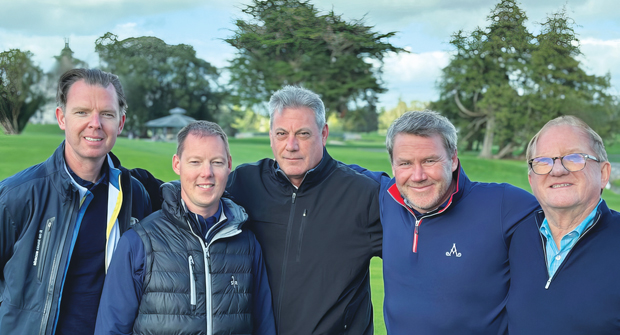
Brad Owen
Golf development director, North America, Turfgrass
The longtime senior director of agronomy at Augusta National talks to Golfdom — for the first time ever! — about his memories of the Masters, how maintenance has evolved and what it was like being a patron for the first time in 38 years.
Golfdom: I’m so excited to be doing this interview, Brad! Congratulations on winning the Legends Award, sponsored by Kafka Granite and Quali-Pro and presented at the Golfdom Summit. I’m sure your office wall is covered with similar awards, like the Georgia GCSA Superintendent of the Year award you recently received. But what does it mean to be called by a colleague like Matt Shaffer and told that a group of superintendents wants to recognize you?
Brad Owen: Well, I certainly have to recognize the wealth of talent that has been recognized over the years, and to be part of that mix is very special. To have Matt Shaffer call me and tell me was special. I worked with him a long time ago; he was an influence on me. I’m extremely blessed and grateful to have him in my work career and as a friend. You know, I don’t put up a lot of (awards) on the wall. I’m probably more humble about it, but I’m very, very pleased and honored to be in this group of folks and individuals, and thank you very much for the consideration.
Golfdom: How is your new job as chief of golf projects, North America, for Turfgrass going? What are you doing with them, and why did you want to make the change?
Owen: This opportunity came about at a point in time when I was ready to move on beyond Augusta National. The timing was perfect. It allows me to do some traveling both in North America and internationally, which is something I’ve always wanted to do more of. It’s a part-time scenario, probably 60 percent of my time. Right now, we’re just about seven months into this work relationship. But it involves not only the traveling but also discussing and being a part of planning with a club in the area of project management or project development.
Within Turfgrass here in the United States — we call ourselves Team USA — we have a former USGA agronomist and a former Toro executive. I’m getting to meet a lot of neat people and be a part of another organization’s development or improvements.
Golfdom: For so many people, Augusta is a once-in-a-lifetime place. And when they finally get there, they remember everything about it. But you were at Augusta National for 38 years — I can only imagine all the memories and stories you have. Can you give me a few that stand out?
Owen: I have so many memories over those 38 years. I certainly remember the more recent ones, just because my memory is not what it used to be (laughs). The 2019 Masters, Tiger Woods winning on that day, when were we able to finish up. You know, those Sundays of the Masters, where everything comes together and it’s complete, the green jacket ceremony has been done, those are just so rewarding to step back and reflect on either being at the — we call it the top of the hill — when you’re standing outside the clubhouse looking out over the nine and 18 green and the property. That’s just so rewarding, and you’ve been so motivated after having a phenomenal staff of volunteers and hires put together such a wonderful event. And even though the golf course is all trampled down from patron traffic and whatnot, it’s just a really special feeling that you can’t get anywhere else.
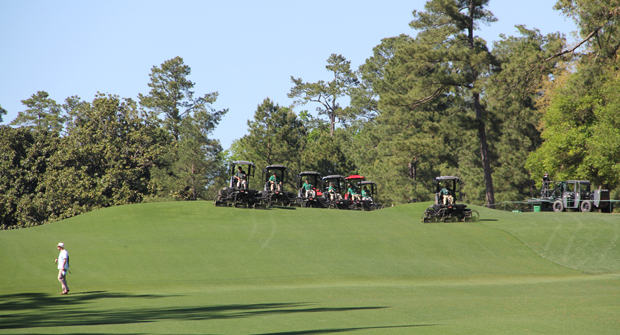
I was fortunate to work for a great membership, very supportive senior leadership and administration. And those times when we would be recognized as a group for the efforts we put forth — whether it was by the chairman, the GM of the club — those were just really special times. I’m so blessed because I had a great staff that made me look good. I’m fortunate to have those people come through that organization and just be motivated and driven to do a phenomenal effort.

Golfdom: What do you think about the way agronomy has changed and evolved over the decades, and how it allowed you to get the job done? What really stands out?
Owen: I think from the science perspective, that would be turfgrass breeding over the years that has given us better and better varieties to work with … whether it’s ryegrass, Bermudas or bents. I really kind of had a mindset of a minimalistic approach. We would not spray large tank mixes of products, so I’m not going to give a lot of products the kudos. We kept it simple with fertility. We’d like to get green speed there by more frequent mowing, less vertical cutting, grooming and brooming. We watched our fertility. From a science perspective, I think the turfgrass breeding allowed us to do those things.
I think equipment has made such strides in the last 40 years, whether it’s the cutting units of fairway or greens mowers. I think the introduction of the (Toro) ProCore vertification machine was groundbreaking and is so much more common now. Those would probably be some of the bigger things.
Golfdom: What advice was given to you that really stuck with you over the years?
Owen: I think you can imagine there’s more than one piece of advice to cover the many facets of our industry, but one of them was, “How do you eat an elephant? You have to do it one bite at a time.” Obviously, we can become overwhelmed with what’s demanded of us in this industry on some occasions. I think another piece would be from the religious realm of Philippians 4:13, which says, “I can do all things through Christ who strengthens me.” Those things help you overcome or handle the demands of the industry.
Golfdom: I’ve heard stories over the years about how exciting it was for people who got the opportunity to intern at Augusta National, to get a phone call or receive a voicemail from you. With so many aspiring turf professionals coming to work for you at Augusta over the years, what was something you’d advise them?

Owen: I think there are more than one or two facets to that, too. One of the most important things is to build rapport with the staff that you’re going to be working with. Not to come in cocky and arrogant, but to have some humility about yourself. Also, realize you can learn a lot from the people around you. So not only would we be available as superintendents and assistants, turf graduates, AITs, but we would ask the incoming young people to seek out answers to questions through your irrigation tech, talk to your mechanic, talk to your spray tech, talk to the guy that’s been on the crew for 50 years. Get information from them. Build that rapport to, potentially, one day, be the manager of that individual. If you can build that relationship early on, I think it means a lot.
We often think it’s all about growing the grass and learning how to spray and fertilize. I’ll just mention a famous professor, many years ago, Dr. Joe Duich. Even 40-some years ago, he realized the importance of people relative to turfgrass. He would tell us, the first day in school, he said, “This job you’re getting into is 10-percent grass and 90-percent people. Do not lose sight of that going forward.” And I think that transcends the generational differences we have with so many people in the workforce. That would be a key thing.
I think the other one was to come into the job with your eyes wide open and not just focus on what your line item is, your job for the day, but look at everybody’s. Go to the job board, look at what everybody’s doing and see how all the different jobs and tasks interact with one another. And ask questions if you don’t understand why something is put up and assigned as it is. We wanted people to be assertive, confident people, which meant them asking some questions. We wouldn’t just spoon-feed information to them automatically. A more assertive individual is going to be more successful, so we’d try to get that mindset in the young kids.
Golfdom: For decades, you’re at Augusta, and you’re so involved in the Masters. Then, this last April, you were a patron. What was this last Masters like for you — not being on the crew, but watching from outside the ropes?
Owen: It certainly was surreal. You can’t predict what that’s going to feel like. But I hosted a bunch of people at the house, both volunteers and friends who were here for the Masters, which I do every year. But to not have to be up at 4 o’clock in the morning and not be there until 7:30 p.m., 8 p.m., every day in the evening was very pleasing and relaxing.
I will say that I went on the first day of the Augusta National Women’s Amateur. I hadn’t been there for many months, but this ryegrass was just so outstandingly pure and green … it’s like it’s the first time I ever saw it! It was refreshing to see what the troops had been able to produce. We left a lot of qualified people there at the helm to continue the excellence that we are known for. It wasn’t surprising, but it was a bit overwhelming to see it again. And after seeing it for 38 years, you think you’ve seen it all, but it’s still great to go back to.
Editor’s note
We have lots more with Brad Owen, including his earliest memory of working at Augusta National, his personal favorite spot on the golf course and whether or not he has a Masters garden gnome in his yard … but we are saving this, plus some additional content, for our 2026 Masters Preview issue, which will be in mailboxes in late March 2026.
Subscribe to Golfdom



If you enjoyed this article, subscribe to Golfdom to receive more articles just like it.